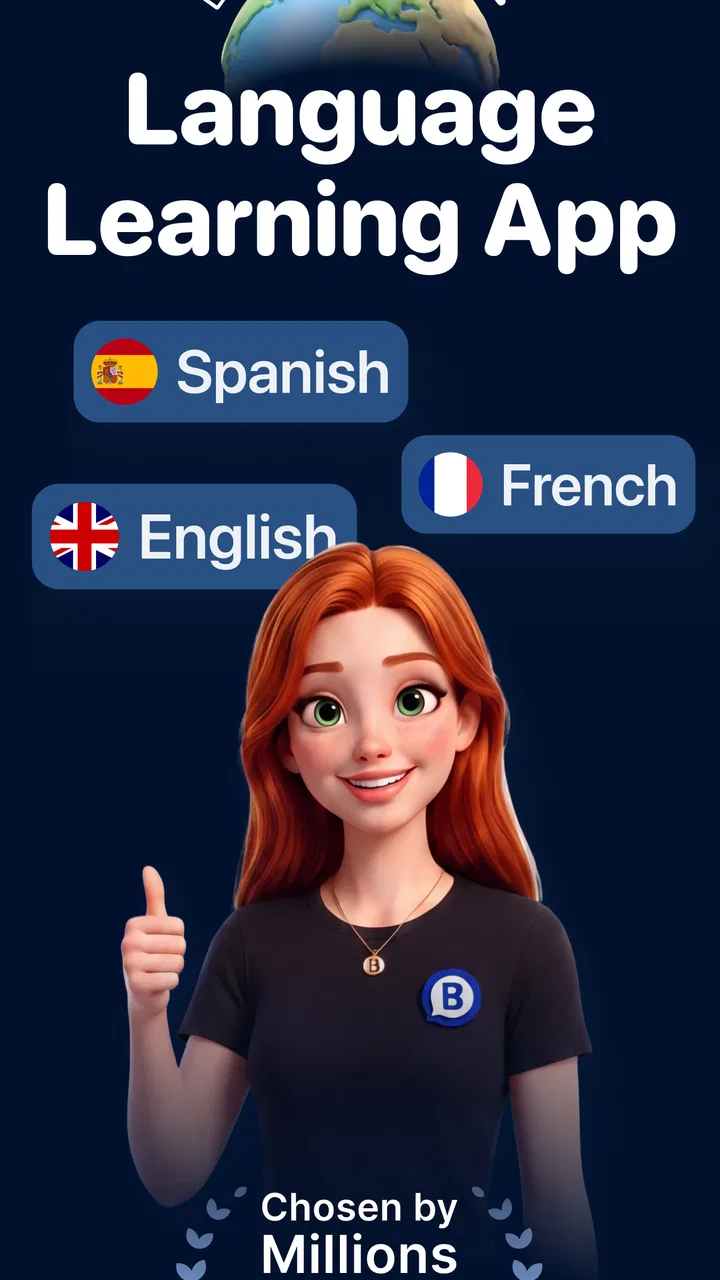
BetterSpeak: AI Language Tutor
- 4.6
- Rating
- 1.00M
- Installs
- Free
- Price
 Analysis by App-foxy
I approached BetterSpeak: AI Language Tutor as someone who wants to speak English more comfortably, not as someone looking for another vocabulary quiz. That distinction matters. The app from HubX is built around speaking and pronunciation practice with an AI tutor, so its value appears when you actually use your voice instead of tapping through silent exercises. After spending time with it, I see a useful tool for learners who understand more English than they can confidently say, especially when nerves make conversation practice difficult.
It is a free education app for Everyone, with optional in-app purchases ranging from $6.99 to $59.99 per item. Its current version is 1.2.6, and it requires Android 10 or later. The app has already passed one million installs and holds a 4.6 average from around 106 thousand ratings, which suggests that the basic idea connects with a large audience. Still, popularity does not automatically make an AI tutor the right choice for every learner, so I paid attention to the situations where it helps and the points where a human teacher or a different learning method remains stronger.
How BetterSpeak feels in everyday practice
I find BetterSpeak most useful when speaking practice has to fit around other people and everyday routines. A learner can rehearse a short exchange before a call or appointment, then put the phone away without needing to arrange a lesson. That makes the next question practical: how should I set expectations when the device and study space are shared?
You May Also Like

 Blood Strike: 2.5 Anniversary
Blood Strike’s Loadouts Turn Every Drop Into a Tactical Gamble
A close look at Blood Strike’s custom loadouts: how fast access to signature weapons reshapes its battle royale rhythm, rewards preparation, and narrows the gap between fights.

 Pandora - Music & Podcasts
Pandora’s Music Is Easy to Start, but Harder to Recover
Pandora’s strength is its low-effort path from a seed to a station. Its weak spot is how much confidence it asks you to place in connection, setup, and quiet recovery.

 8 Ball Pool
 Is Built on Rivalries, Rematches, and Routine
A close look at the rivalries, rematches, shared routines, and unanswered safety questions that turn a quick pool match into a persistent mobile community.

 Samsung Music
’s Quiet Strength Is Playing What You Already Own
Its reach comes less from spectacle than from dependable access to a personal library. That simplicity is both the app’s strongest retention engine and its ceiling.

 AccuWeather: Weather Radar
AccuWeather Review: A Quick, Clear Forecast for Everyday Decisions
For everyday plans, the best forecast is the one you can understand quickly. AccuWeather makes rain timing, radar, and local conditions easy to act on, with a few trade-offs.

 Hill Climb Racing
Why Hill Climb Racing Still Turns Crashes Into One More Run
A tiny car, a bumpy hill and one more upgrade: Hill Climb Racing keeps resurfacing because its simple chaos makes every near-miss feel personal.
More From Our News Desk



A speaking-first approach instead of another flashcard routine
The most important thing to understand is that this is not primarily a reading or memorization companion. Its purpose is to get me producing English aloud. That makes the first few sessions slightly more demanding than a conventional language app. I cannot simply recognize a correct answer and move on; I have to form words, say them, and pay attention to how they sound.
That extra effort is also the reason the app can fit a genuine weakness. Many learners can complete grammar exercises successfully but hesitate during a real conversation. BetterSpeak creates a lower-pressure place to rehearse. I can repeat a phrase, try again, and focus on pronunciation without worrying that another person is waiting impatiently for my answer.
I found this particularly useful for short, practical exchanges: introducing myself, asking for clarification, explaining a simple problem, or responding to a familiar question. Those situations are more useful for building confidence than memorizing isolated words. The app makes the practice feel closer to speaking than a silent lesson does, even though it cannot fully reproduce the unpredictability of a live conversation.
Who will get the most from it
BetterSpeak makes the most sense for an early or intermediate learner who already knows some basic English and wants to turn passive knowledge into spoken language. If I can understand a sentence but struggle to say a similar sentence myself, an AI speaking tutor is a sensible addition to my routine. It is also appealing to people who do not want to book lessons, speak with strangers, or practice in front of family members.
Busy learners can use it in small windows that would not justify a full class. A short session before work, during a quiet break, or at home in the evening can be enough to keep speaking active. I would not treat that as a replacement for a complete course, but it is easier to maintain than a study plan that requires a fixed appointment every time.
It can also suit someone preparing for a trip or a change in daily responsibilities. Rehearsing useful sentences aloud before facing a hotel desk, workplace introduction, or casual conversation can reduce the mental delay that often appears when English has to be spoken quickly. The benefit is not only pronunciation; it is becoming accustomed to retrieving language with my voice.
A realistic routine that makes the app more useful
My preferred way to use a tool like this is not to open it randomly and complete whatever appears first. I would choose one narrow situation, such as making a polite request, and stay with that theme for several sessions. After speaking a phrase, I would note the words that felt difficult, then create a small personal list of alternatives. For example, I might practice a direct request first, then a softer version, and finally a follow-up question.
This workflow turns pronunciation practice into communication practice. It also exposes a trade-off: repeating the same type of sentence can improve fluency, but it may leave gaps if I never vary the context. I would therefore spend one session on controlled repetition and the next on changing the subject, tense, or level of formality. That simple alternation is more productive than chasing a perfect result on one phrase.
Another useful habit is to speak at a natural pace after the careful attempt. Learners often slow down so much that their pronunciation becomes unnatural. I would first aim for clarity, then repeat the sentence as I would actually say it to another person. This helps prevent the app from becoming a performance exercise where every sentence sounds memorized.
What the AI tutor changes about practice
The AI format removes one of the biggest barriers to speaking: embarrassment. I can practice the same sentence several times without feeling that I am wasting a teacher’s time. That makes experimentation easier. I can try a different word, change the order of a sentence, or deliberately practice a sound that I usually avoid.
At the same time, an AI tutor is not a human conversation partner. It can support repetition and guided speaking, but real people interrupt, use slang, change topics, speak with different accents, and misunderstand us for reasons that are not always related to pronunciation. BetterSpeak is therefore strongest as a rehearsal space. I would use it before a conversation class or alongside real speaking, not as the only form of interaction.
This is an important distinction for learners who want immediate conversational confidence. The app can help me prepare my mouth and memory to produce English, but confidence also comes from handling surprises. If my goal is to negotiate, debate, or participate in fast group discussions, I need live practice as well.
Pronunciation feedback is helpful, but it needs judgment
Pronunciation tools can draw attention to sounds I have been ignoring. That is valuable because many mistakes become invisible when I only read or write. I may recognize a word perfectly on a screen while saying it in a way that another speaker finds difficult to understand. Speaking aloud makes that gap harder to overlook.
However, I would not treat every automated signal as an absolute verdict. Speech recognition can be affected by background noise, microphone position, speaking speed, and the way a learner’s accent differs from the expected pattern. If a phrase is repeatedly marked as difficult, I would test it again in a quiet place, slow down slightly, and listen to whether the problem is a specific sound, a missing ending, or simply a rushed rhythm.
The most useful question is not “Did the app approve me?” but “Can another person understand me more easily now?” That mindset prevents over-practicing tiny details while neglecting sentence stress and natural pacing. For many learners, being clear and comfortable matters more than imitating one particular accent.
How it compares with familiar alternatives
Compared with flashcard apps, BetterSpeak targets a different stage of learning. Flashcards are excellent for building recognition and recalling vocabulary quickly, but they do not necessarily prepare me to speak in complete sentences. BetterSpeak is more demanding because it asks me to retrieve and pronounce language, yet it may be more relevant when my main complaint is, “I know the words, but I cannot use them in conversation.”
Compared with grammar-focused courses, it gives less value to learners whose immediate problem is understanding sentence structure. I would use a grammar reference when I repeatedly make the same tense or word-order mistake, then bring those corrected patterns into speaking practice. The two approaches can complement each other, but neither one fully replaces the other.
Compared with a human tutor, the app is more convenient and less intimidating, while the person is better at adapting explanations to my background and noticing meaning that an automated system may miss. A teacher can also challenge me with unexpected follow-up questions. If I need exam strategy, detailed writing correction, or specialized professional English, a qualified tutor is likely the better primary investment.
Compared with language-exchange platforms, BetterSpeak offers more control and privacy. I do not have to coordinate schedules or worry about giving an uneven exchange in return. The compromise is that I lose the cultural context and spontaneous reactions that make conversations with real people valuable. I would choose the app for structured rehearsal and an exchange partner for unpredictability.
What current users should know about the app’s position
The release date is January 9, 2026, so the app is still relatively early in its product life. Its current version, 1.2.6, shows that HubX has already moved beyond the first public build and is actively shaping the experience. I see that as a positive sign for a speaking app, because recognition quality, lesson flow, and feedback can all benefit from careful refinement over time.
For someone already using it, the sensible approach is to judge updates by their effect on daily practice rather than by the version number alone. Does a session feel easier to start? Is feedback easier to understand? Can I move from a model sentence to a more personal answer? Those are the changes that matter. I would also keep my own routine consistent when an update arrives, so I can tell whether progress comes from the product or from simply practicing more often.
New users should not assume that an early version will remain identical. A growing app may adjust its lesson organization, feedback behavior, or paid boundaries as the developer learns how people use it. That is not automatically a problem, but it is a reason to avoid building an entire language plan around one tool. Keep notes, retain other study resources, and make sure the free experience meets your needs before considering an optional purchase.
Where the free model helps and where it may frustrate
Being free to start makes BetterSpeak easy to test without committing money immediately. That matters for an AI learning app because usefulness depends heavily on personal comfort with the speaking flow. I would spend enough time with the available practice to answer practical questions: Do I enjoy saying answers aloud? Is the feedback understandable? Does the app fit my schedule? Am I correcting recurring mistakes, or merely repeating prompts?
The optional purchases deserve a careful look. Individual items range from $6.99 to $59.99, so the difference between a small experiment and a substantial commitment is meaningful. I would not pay simply because I had completed a few sessions. I would first identify a specific reason to upgrade, such as wanting a longer-term routine or access to material that directly matches my goals, and then compare that cost with a class, a textbook, or another speaking resource.
This pricing structure may suit motivated learners who use the app frequently, but it could be poor value for someone who practices only occasionally. A paid feature cannot create consistency by itself. If I am opening the app once every few weeks, I would keep the free option or choose a resource that better matches my habits.
Remaining gaps and points of friction
The biggest limitation is the boundary between guided speaking and genuine conversation. An AI tutor can make practice less stressful, but it cannot fully recreate interruptions, unclear audio, regional expressions, or the need to respond to an unexpected idea. Learners who only use structured prompts may feel prepared until a real person changes direction.
There is also a risk of optimizing for the app’s response instead of communication. A learner might repeat a sentence until it receives a favorable result while still lacking the flexibility to express the same meaning differently. I would counter that by rewriting each practiced sentence in my own words and saying it without looking at the original. If I cannot do that, I have practiced imitation rather than usable language.
Privacy and environment can affect the experience in ordinary ways. Speaking requires a place where I am comfortable using my voice, and some people simply do not have that space at convenient times. A silent study app is easier to use on public transport or in a shared office. BetterSpeak is a better choice when I can speak aloud, not when I need completely quiet, screen-only learning.
It is also not the ideal first tool for someone who knows almost no English. Absolute beginners may need clear explanations of basic grammar, translations, and visual vocabulary support before speaking practice feels productive. The app can become more useful after a foundation is in place, but I would not expect it alone to explain every building block of the language.
Questions I would ask before installing it
If you are wondering whether it works without speaking out loud, the answer is effectively no in terms of its main purpose. You may be able to browse or prepare silently, but the central benefit comes from using the microphone and practicing spoken English. I would install it only if I am willing to make voice practice part of the routine.
If you are concerned about age suitability, the Everyone rating makes it broadly accessible. That does not mean every learner will find the teaching style appropriate, though. A younger student may still benefit from guidance from a parent or teacher, especially when deciding which practice goals are realistic.
If you are choosing between this and a live tutor, I would ask what kind of correction you need. Choose BetterSpeak when convenience, repetition, and low-pressure rehearsal are the priority. Choose a tutor when you need personalized explanations, professional terminology, accountability, or realistic back-and-forth conversation.
If you are deciding whether the app is enough for fluency, I would say no. It can occupy an important part of a balanced plan, particularly speaking and pronunciation, but fluency also needs listening, reading, vocabulary growth, grammar control, and interaction with people. Its best role is focused practice rather than a complete substitute for language learning.
What I would watch as the app develops
Because the product is still young and already moving through versions, I would watch how well it connects pronunciation work with spontaneous speaking. The most meaningful future progress would be a smoother path from repeating a model to answering in personal, flexible language. I would also pay attention to whether feedback becomes more explanatory, since knowing that a sentence is difficult is less useful than understanding how to improve it.
I would also look for better support for different learner goals. Travel English, workplace conversations, casual social talk, and exam preparation require different vocabulary and levels of formality. A learner can create some of that variety through personal practice, but the app becomes more valuable when its guided material reflects the situation I actually face.
For existing users, the best sign of healthy evolution will be practical rather than flashy: fewer confusing corrections, easier session continuity, and more opportunities to say something original. I would rather see those improvements than a larger collection of disconnected exercises. The version number matters less than whether the app helps me speak more clearly in situations outside the screen.
My recommendation
BetterSpeak: AI Language Tutor is worth trying if your main obstacle is speaking English aloud. I like its focus because it addresses a problem that silent study often leaves untouched: the distance between recognizing language and producing it under pressure. The free entry point makes it reasonable to test, and the AI format offers a private way to repeat difficult phrases without scheduling another person.
I would recommend it as a focused companion, not as a complete language school. Use it with a clear routine, practice situations that matter in your life, and turn automated feedback into real-world experiments. If you need human correction, advanced professional language, or unpredictable conversation, add a tutor or speaking partner rather than expecting the app to cover everything.
My final judgment is positive but specific: this is a good choice for building the habit of speaking, especially when embarrassment or lack of opportunity keeps you quiet. It is a weaker choice for learners who prefer silent study, need deep grammar teaching, or want immediate real-person interaction. If you are ready to use your voice regularly and evaluate progress by clearer communication rather than perfect app scores, it can earn a useful place in your English-learning routine.
FAQs for BetterSpeak: AI Language Tutor
01What is BetterSpeak: AI Language Tutor?
BetterSpeak is an innovative language learning app that utilizes artificial intelligence to provide personalized tutoring. It adapts to your learning style, offering tailored exercises, real-time feedback, and interactive lessons. This makes language acquisition more engaging and effective for users of all proficiency levels.
02How does BetterSpeak personalize my learning experience?
BetterSpeak uses AI algorithms to analyze your progress and adapt lessons accordingly. It tracks your strengths and weaknesses, adjusting the difficulty and focus of exercises to enhance your learning journey. This personalized approach ensures that you progress at a pace suited to your individual needs.
03What languages are supported by BetterSpeak?
BetterSpeak offers a wide range of languages, including popular options like Spanish, French, Mandarin, and German. The app continuously expands its library, adding new languages based on user demand and linguistic trends, ensuring a diverse and comprehensive language learning experience.
04Is BetterSpeak suitable for beginners?
Yes, BetterSpeak is designed for learners at all levels, from beginners to advanced. The app's user-friendly interface and structured lessons make it easy to start learning a new language, while its advanced features support more experienced users in honing their skills and fluency.
05Does BetterSpeak require an internet connection?
Some features of BetterSpeak, such as real-time feedback and interactive lessons, require an internet connection. However, the app also offers offline capabilities, allowing you to download lessons and practice exercises, making it convenient for learning on the go without constant connectivity.
Pros
- Interactive lessons enhance language retention.
- AI adapts to your learning speed and style.
- Wide range of languages available to learn.
- User-friendly interface makes navigation easy.
- Regular updates with new features and content.
Cons
- Requires a stable internet connection.
- Premium features locked behind a paywall.
- Occasional AI response delays.
- Limited offline functionality.
- Some languages lack advanced content.

BetterSpeak: AI Language Tutor
Gallery